


POS System Myths in Cambodia: Five Things Shop Owners Get Wrong
POS system myths in Cambodia keep many good shop owners from trying one. Not because the owners are wrong to be careful, but because a few worries get repeated so often that they start to sound like facts. “It’s too expensive.” “My staff won’t learn it.” “My shop is too small.” Most of these ideas come from an older picture of what a POS is: a big, costly machine for supermarkets.
Today, a POS can be an app on a tablet or phone, running on a monthly plan. Here are five common myths, and what’s actually true.
Myth 1: “A POS is too expensive for my shop”
What people think: a POS means buying expensive equipment and paying a large amount up front.
What’s actually true: a cloud POS like MyLekha runs on a plan you pay for monthly, and you can start on a tablet or phone you may already own. You can see current plans on the pricing page, and you can try the system free for 15 days, with no credit card, before paying anything.
It also helps to count the cost of not having one. Every wrong price, every forgotten sale, every product you didn’t know was running low, and every month you couldn’t tell whether you made money has a cost. Those costs are hard to see because they’re never written down. A POS makes them visible.
Myth 2: “It’s too complicated for my staff”
What people think: only trained, technical people can use a POS, and staff will make more mistakes with it than without.
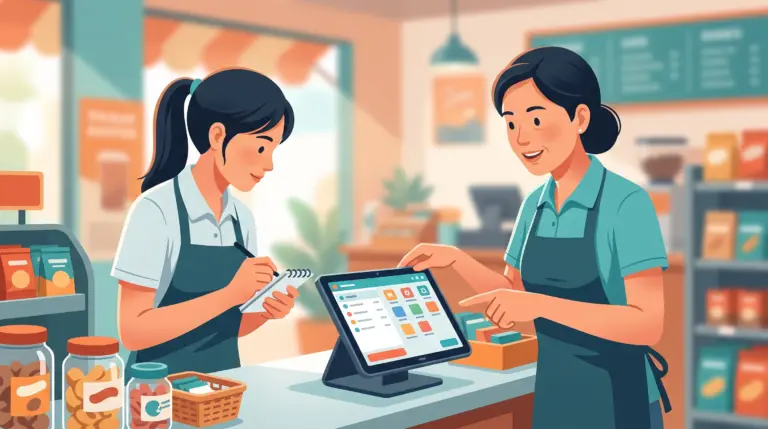
What’s actually true: a POS is built for the people at the counter. Staff usually learn the basics, such as ringing up a sale, applying a discount, and taking a QR payment, in a short session. The interface is available in Khmer and English, and the MyLekha team provides setup and training support.
The staff who struggle most are often the ones using a notebook during a rush. A POS replaces mental math and handwriting with a few taps.
Myth 3: “My shop is too small for a POS”
What people think: a POS is only for big businesses with many branches.
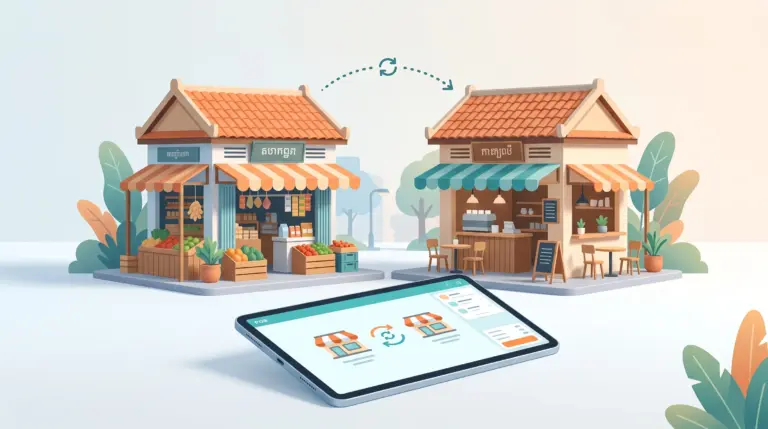
What’s actually true: small shops often gain the most. With one or two people running everything, there’s little time to count stock, add up sales, or work out profit by hand. A POS does it as you sell. You don’t need a fixed counter, either: a phone or tablet is enough to start, and the system grows if you add staff or open a second shop.
If your business is small, the decisions it makes are small too, but each mistake costs a bigger share of your income. That’s a good reason to get your numbers right early.
Myth 4: “My notebook works fine”
What people think: if the notebook adds up at the end of the day, nothing is wrong.
What’s actually true: a notebook records what someone remembers to write. On a busy day, that’s less than what happened. It can’t warn you when stock is low, show your best sellers, compare this week to last week, or tell you which staff member made which sale. It also can’t be checked from home, and it can be lost.
A notebook isn’t wrong. It just can’t answer the questions that help you grow. Our post on how much sales data you lose without a POS goes into this in detail.
Myth 5: “Switching to a POS will disrupt my shop”
What people think: moving to a new system means closing the shop, losing a week, and confusing everyone.
What’s actually true: most MyLekha customers load their product catalogue and start taking sales within a day. You can run the new system alongside your old method for a short time while your team gets comfortable, so there’s no need to close or switch overnight. Our post on what happens in your first week walks through it day by day.
Quick Comparison
| The Myth | The Reality |
|---|---|
| “Too expensive” | A monthly plan, a free 15-day trial, and no credit card to start |
| “Too complicated” | Basics learned in a short session, Khmer and English interface, setup and training support |
| “Too small for a POS” | Small shops gain the most, and a phone or tablet is enough |
| “My notebook is fine” | A notebook can’t warn, compare, or report |
| “It will disrupt my shop” | Most shops start selling within a day, and can run both methods at first |
How to Find Out for Yourself
The best way to test a myth is to try it. A free trial costs nothing, and a few days of real use will tell you more than any article can. Our post on how to test a POS during a free trial gives a simple 15-day plan. You can also see what the system includes on our features page.
FAQ
Is a POS really affordable for a small business? MyLekha is priced as a monthly plan, and you can try it free for 15 days without a credit card. See the pricing page for current plans.
Will my staff be able to use it? Most staff learn the basics in a short session. The interface is in Khmer and English, and training support is available.
Can I use it with just a phone or tablet? Yes. You can start with a phone or tablet, without a large counter setup.
Do I have to stop using my notebook right away? No. Many shops use both for a short time while the team gets comfortable.
How long does it take to start? Most businesses load their catalogue and start selling within a day.
Ready to Test the Myths Yourself?
Start your free 15-day MyLekha trial and see for yourself. No credit card required.