

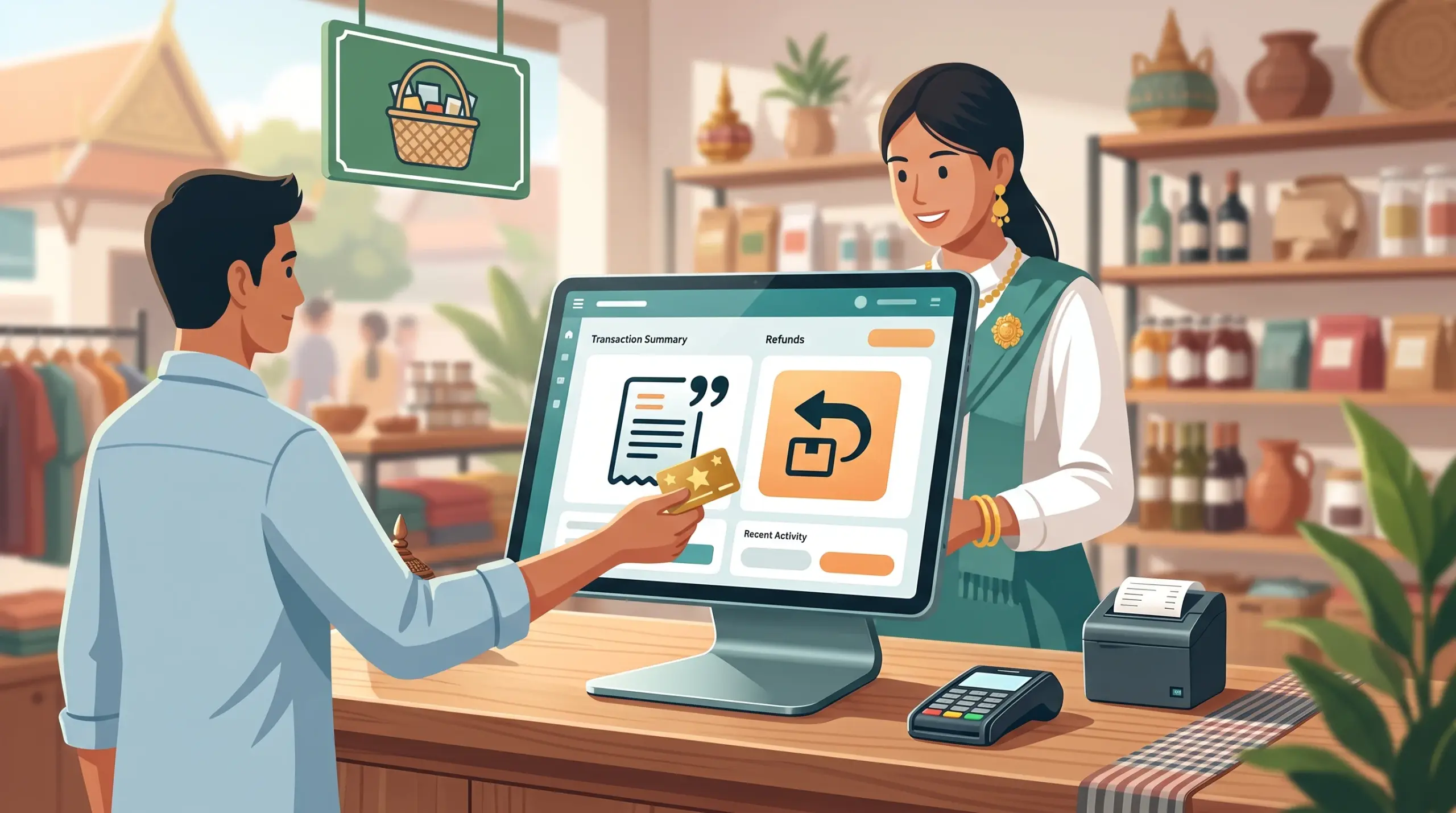
Customer Loyalty and CRM on a POS in Cambodia: Turn First-Time Buyers Into Regulars
Most shops and cafés know a handful of customers by face — the regular who orders the same coffee every morning, the family that shops every weekend. But most customers come and go without the business ever really knowing who they are, how often they return, or what they tend to buy. Without a system, loyalty is informal at best: a paper punch card that gets lost, or a discount given “because I recognize you” that isn’t tracked anywhere.
A POS with built-in customer loyalty and CRM tools turns that informal relationship into something the business can actually see, manage and build on.
What businesses lose without customer tracking
- No record of repeat customers. Without sign-ups, the business has no way to know who its regulars actually are or how often they return.
- Loyalty that depends on memory. A staff member might recognize a regular and offer a small favor, but that isn’t consistent, trackable, or fair across every shift.
- Missed chances to re-engage. A customer who hasn’t come back in weeks could be worth a reminder or an offer, but without records, nobody notices they’re gone.
- No view of what regulars actually buy. Understanding which customers are most valuable, and what keeps them coming back, is nearly impossible from memory alone.
How MyLekha handles it
Customer sign-ups. MyLekha supports customer sign-ups, giving the business a real record of who its customers are rather than relying on recognition alone.
Loyalty programs. Built-in loyalty program tools are designed to boost retention and repeat sales, giving the business a structured way to reward customers for coming back.
Customer insights. The system can track purchase behavior and surface top customers, so the business can see who its most valuable customers are, not just guess.
Works with pricing tools. Combined with multiple price levels, loyal or high-volume customers can be set up with their own pricing, not just a one-time discount.
What this looks like in practice
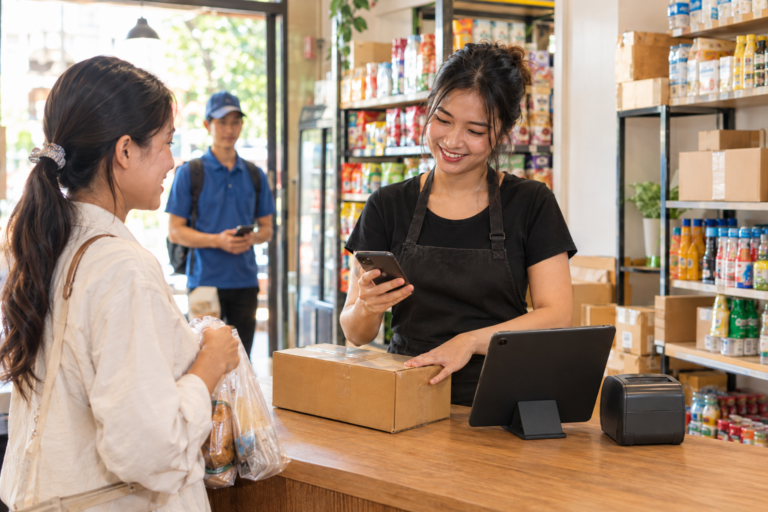
- A new customer signs up at checkout, whether on a first visit or after asking about a loyalty offer.
- Each future purchase is linked to their profile, building a picture of how often they visit and what they typically buy.
- The owner can see which customers are the most frequent or highest-spending, and consider a loyalty reward or a personal thank-you.
- A regular who hasn’t visited in a while stands out in the data, giving the business a chance to reach out before the relationship fades.
Why this matters for the business
- Turns anonymous transactions into relationships the business can actually see and manage
- Rewards consistency fairly, not based on which cashier happens to recognize a face
- Surfaces your best customers, so marketing or special offers can be targeted rather than generic
- Builds long-term revenue, since repeat customers are typically more valuable than one-time buyers
This fits naturally with your other counter tools — see discounts and promotions for running loyalty offers, and multiple price levels for rewarding your best customers directly.
Conclusion
Every shop has regulars, but not every shop can actually see who they are or how valuable they’ve become. With customer loyalty and CRM tools built into your POS, those relationships turn into real data you can use to keep customers coming back.
Explore MyLekha POS features, check pricing, or talk to our team about setting up customer loyalty for your business.
FAQ
Can customers sign up directly at checkout?
Yes, MyLekha supports customer sign-ups as part of the POS workflow.
Can I see which customers buy from me the most?
Yes, the system tracks customer purchase behavior and surfaces top customers.
Can loyal customers get special pricing instead of a one-time discount?
Yes, this can be paired with price levels set up for specific customer types.
Is this useful for a small shop, or only larger businesses?
Any business with repeat customers can benefit — even a small café with a handful of regulars can use it to recognize and reward loyalty.