

Employee Management and Access Control on a POS in Cambodia: Who Can See and Do What
As a shop grows past one or two people, a new question comes up: should every staff member be able to see the day’s full sales total, apply unlimited discounts, or delete a transaction? For most businesses, the honest answer is no. But without a system, everyone often shares the same login and the same access, which means there’s no way to tell who did what, and no way to limit what a new or junior staff member can touch. (Official standards supported by National Bank of Cambodia (NBC))
Table of Contents
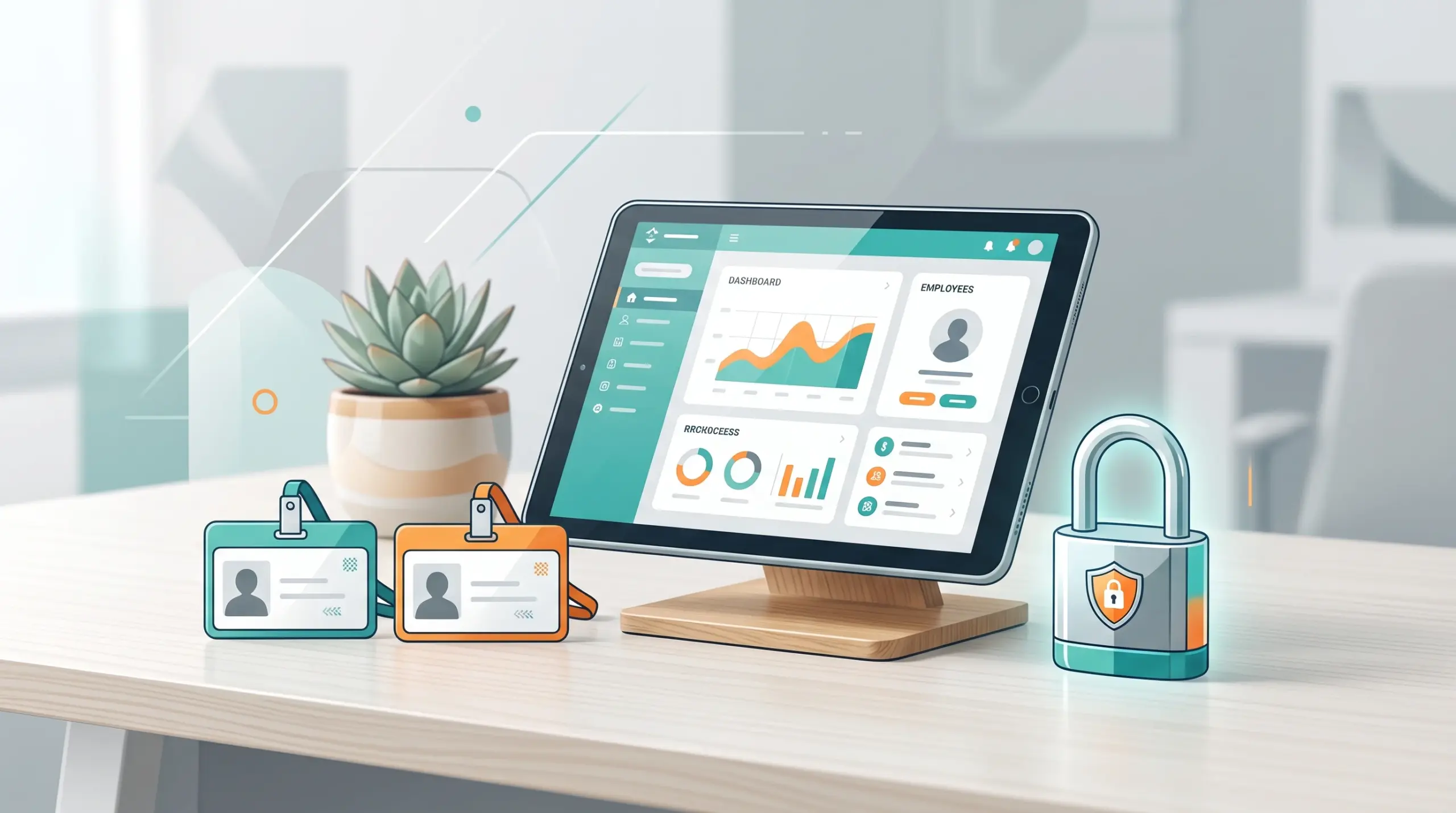
Employee management and access control on a POS gives each staff member their own identity in the system, with permissions that match their role.
What goes wrong without it: Employee Management Access Control
- Shared logins hide accountability. If every cashier uses the same account, a mistake or an unusual discount can’t be traced back to a specific person.
- Everyone has the same access. A new part-time cashier has the same ability to apply discounts, view reports or void a sale as the owner, whether that’s appropriate or not.
- No visibility into individual performance. Without separate accounts, it’s hard to see which staff member is selling well, making errors, or needs more training.
- Security risk when staff leave. With one shared login, there’s no clean way to remove access for someone who no longer works there without changing the password for everyone.
How MyLekha handles it
Individual employee accounts. MyLekha supports managing employee data, so each staff member can be set up with their own access rather than sharing one login.
Access controls. The system includes access controls, letting the business decide what each staff member can see or do.
Performance tracking. Employee data can support performance tracking, giving owners visibility into how individual staff members are doing, not just the shop as a whole.
Works with shift tracking. Combined with shift and cash management, individual accounts make it possible to tie every shift, sale and cash drawer directly to the person responsible.
Per-store permissions for multi-branch teams. For businesses running more than one location, employee access can be set up per store, so staff at one branch aren’t automatically able to see or affect another branch’s data.
What this looks like in practice
- Each cashier logs in with their own account instead of a shared one.
- A junior staff member is given access to make sales but not to apply large discounts or view full financial reports.
- At the end of the week, the owner reviews performance by employee, seeing who’s selling well and who might need support.
- When a staff member leaves, their access is removed individually, without disrupting anyone else’s login.
Why this matters as a business grows
- Clear accountability for every sale, discount and shift
- Appropriate access for each role, so junior staff can’t accidentally (or intentionally) do more than they should
- Useful performance data for training, recognition, or staffing decisions
- Safer offboarding when staff leave, since access is per-person, not shared
This pairs naturally with shift and cash management and becomes especially useful for businesses using multiple stores, where different staff work at different locations.
Conclusion
A growing team needs more than a shared login and good trust. With individual accounts and access controls built into your POS, every staff member has exactly the access their role needs, and every action can be traced back to the person who did it.
Explore MyLekha POS features, check pricing, or talk to our team about setting up employee accounts for your business.
FAQ
Can each staff member have their own login? Yes, MyLekha supports managing individual employee accounts.
Can I limit what a cashier is allowed to do? Yes, access controls let you manage what each employee can see or do.
Can I see how each employee is performing? Yes, employee data supports performance tracking.
Is this only useful for larger teams? It’s most valuable once you have more than one or two staff members, but even a small team benefits from knowing who did what.
Does this work across multiple store locations? Yes, employee access can typically be managed per store for multi-branch businesses.