


Handle Customer Complaints in Cambodia: How Your Sales Records Help You Stay Calm and Fair
Learning to handle customer complaints in Cambodia well comes down to one thing: knowing what actually happened. A customer says they were charged too much. A staff member says the price was right. Without a record, it becomes one person’s word against another’s, and someone usually leaves unhappy. With a record, the same conversation takes a minute and ends fairly for everyone.
Complaints are not a sign that your business is failing. Every shop gets them. What matters is how you handle them, because a complaint handled well can leave a customer more loyal than if nothing had gone wrong.
The Complaints Most Shops Get
- “The price was different from what I expected”
- “I was given the wrong item”
- “My change was wrong”
- “This product is faulty or not what I wanted”
- “I waited too long”
- “I paid, but you say I didn’t”
Most of these can be settled quickly if you can see exactly what was sold, at what price, and how it was paid.
Why Records Change the Conversation
1. Facts replace arguments When a sale is recorded, the question stops being “who is right?” and becomes “what does the record say?” That is easier to accept for both sides.
2. You can be generous without being taken advantage of If the record shows the customer is right, you can fix it with a smile. If it shows a mistake was made by your staff, you can own it. If it shows something different from what the customer remembers, you can explain it kindly, with proof.
3. Staff feel protected Your team doesn’t have to defend a decision from memory. The record backs them up, or shows where something needs fixing.
4. You can spot patterns One wrong price is a mistake. The same product causing complaints again and again is a signal that something needs to change.
A Simple Process for Any Complaint
1. Listen first Let the customer finish. Don’t interrupt, and don’t start explaining. Many people only want to be heard, and a calm start lowers the temperature.
2. Say you’ll check “Let me look at that for you” is a useful sentence. It shows you take them seriously, and it gives you a moment to find the facts.
3. Find the sale Look at the receipt, or find the sale in your system. Check the items, the prices, the total, the payment, and the time.
4. Compare with the customer’s story Does the record agree with what the customer says? Often it does, and the fix is simple. Sometimes the customer has misremembered, and the record clears it up.
5. Decide fairly If you made a mistake, correct it. If the product is faulty, replace or refund it. If there was no mistake, explain what happened clearly and politely, and show the record if it helps.
6. Record the fix properly If you refund, record it as a refund linked to the original sale, so your stock and reports stay accurate. A refund taken from the till without a record creates a new problem later.
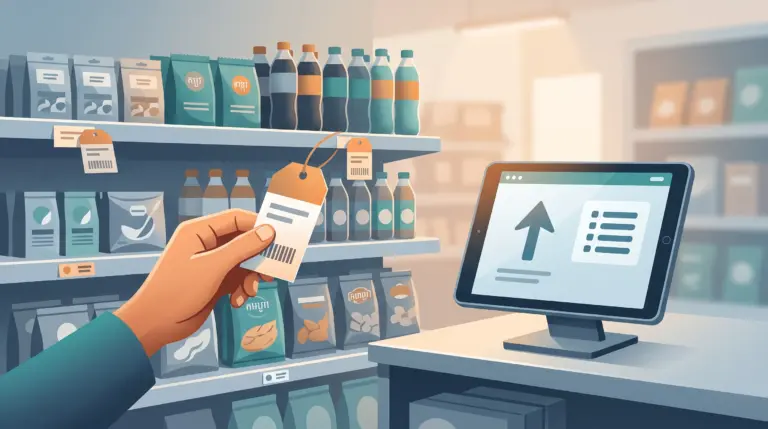
7. Follow up on the cause Ask what went wrong. Was the shelf label wrong? Was a price changed in the system but not on the shelf? Was a staff member unsure how to ring something up? Fixing the cause prevents the next complaint.
Phrases That Help
You don’t need a script, but a few phrases make difficult moments easier:
- “Thank you for telling me. Let me check this for you.”
- “I’m sorry for the trouble. Let’s sort it out.”
- “Here is what the record shows. Does this look right to you?”
- “I can refund this now, or exchange it, whichever you prefer.”
- “Thank you for your patience.”
How a POS Helps You Settle Complaints
1. Every sale is recorded The items, prices, and totals are saved when the sale is made, so there’s a record to check later.
2. Receipts print at checkout A customer who has a receipt can show you exactly what they bought, and you can compare it with your own record. Receipts can be customized with your business details.
3. Refunds are linked to the original sale Quotes and refunds are supported, so a refund is tied to the sale it belongs to. Our post on quotes and refunds on a POS explains how this works.
4. Every action is tied to a staff member Sales are recorded against the staff member who made them, and you can set permissions for who can process refunds or give discounts, so there’s a clear record of who did what. Reports can be filtered by staff.
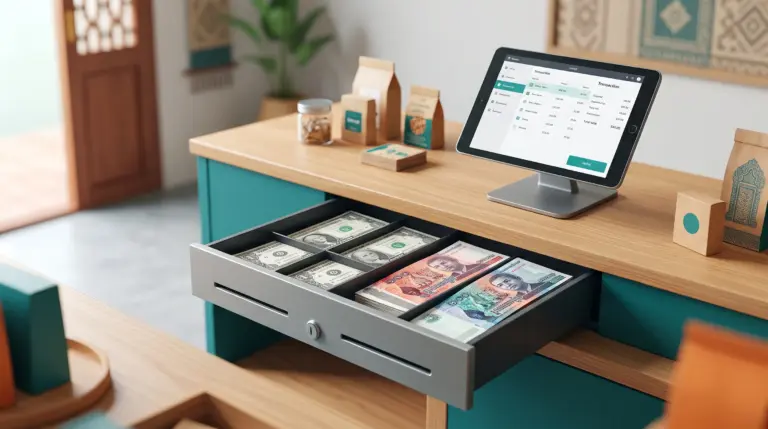
5. Payments are recorded by type Cash, KHQR, and ABA PayWay are recorded with the sale, so a question like “I paid, but you say I didn’t” can be checked.
6. Accurate stock reduces “wrong item” problems Scanning items, instead of typing them, makes wrong prices and wrong items less likely in the first place.
Quick Comparison
| Without Records | With a POS | |
|---|---|---|
| A price dispute | One person’s word against another’s | Check the sale record |
| A refund | Cash from the till, no record | Linked to the original sale |
| A payment question | Check a phone by hand | Payment recorded with the sale |
| Who made the sale | Remembered | Recorded on every sale |
| Repeating problems | Hard to notice | Visible in your records over time |
Getting Started
You don’t need to change everything to handle complaints better. Start by making sure every sale is recorded and every receipt is offered. Most MyLekha customers load their catalogue and start selling within a day. See everything the system includes on our features page, or check current plans on the pricing page.
FAQ
Can I look up a past sale if a customer disputes it? Yes. Every sale is recorded in the system, so you can check what was sold, the price, and how it was paid.
How do I record a refund properly? Refunds are supported and linked to the original sale, so stock and reports stay accurate.
Can I control who is allowed to give refunds? Yes. You can set permissions so that only certain staff members can process refunds or give discounts.
What if the customer has lost their receipt? Because the sale is recorded in the system, it can usually be found without the printed receipt.
Will having records make me seem like I don’t trust my customers? No. Records protect both sides. Most customers appreciate a quick, fair answer.
Ready to Settle Complaints With Facts?
See how MyLekha helps you keep clear records of every sale, refund, and payment. Start your free 15-day trial today, no credit card required.