

Customer Display for POS in Cambodia: Build Trust and Speed Up Checkout
In a busy shop or café in Phnom Penh, Siem Reap or Battambang, checkout is the last moment of the customer’s visit. It’s also where small doubts show up: Was that the promotion price? Did she scan the same item twice? What is the total in riel?
A customer display for your POS system in Cambodia answers those questions before they are asked. The customer sees every item, price, discount and the running total as the cashier scans, so there is nothing to question when it’s time to pay.
Why checkout visibility matters
At a traditional counter, the customer often sees the total only when the cashier says it or the receipt prints. That causes three common problems:
- Last-second questions. A discount, a manual price change or an extra item surprises the customer at the end. The cashier stops to explain and the line waits.
- Doubts about accuracy. Even when the bill is correct, a customer who can’t see it may wonder whether it is.
- Dead time for the customer. They stand and watch the back of a screen while someone else works.
What is the MyLekha customer display?
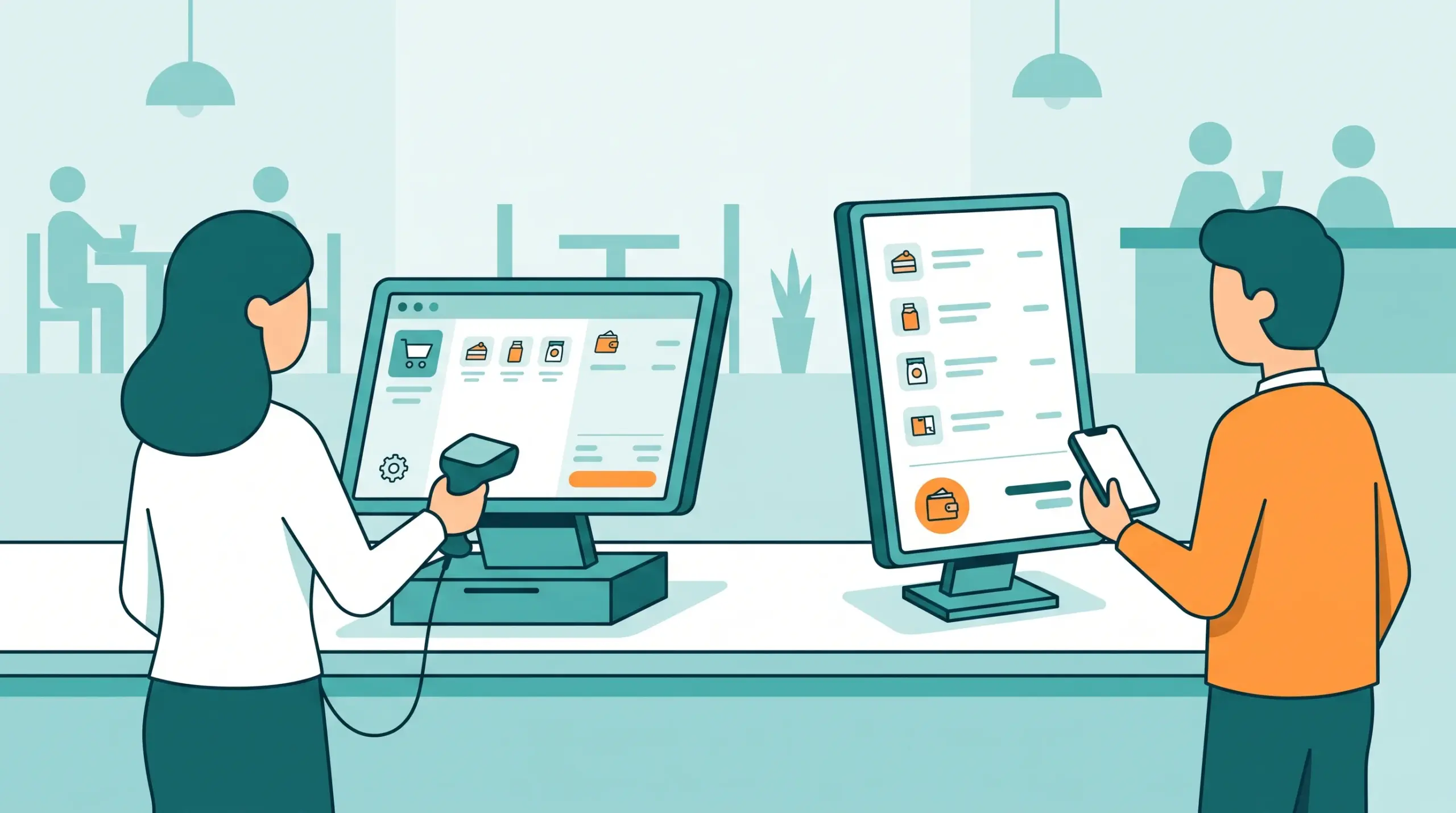
The MyLekha customer display is a second screen that faces the customer and shows the transaction live as the cashier works on the main MyLekha POS. Each scanned or added item, its price and quantity, any discount, and the running total appear on the customer’s side at the same moment.
The cashier keeps working on the main screen as usual and the customer follows along without leaning over the counter.
Four benefits for shops and cafés
1. Customers trust the total. When people watch the bill build item by item, they don’t need to ask if it’s right. Seeing a discount applied line by line also makes your promotions more convincing.
2. Faster queues. Customers who can see the total getting closer can get cash or their phone ready. Less time is lost between “scan” and “pay,” which matters most at lunch, after work and on weekends.
3. Fewer mistakes and disputes. If a wrong item or quantity is scanned, the customer often notices right away and the cashier can fix it before payment. That is easier than correcting it after the customer has paid.
4. A more professional counter. A customer-facing screen tells shoppers that your business is organized and open about pricing. For cafés and boutiques, that supports the image you want.
How it fits into your daily workflow
The display works with the same tools your team already uses. MyLekha POS supports sales from a phone, tablet or desktop, receipt printers, barcode scanners and cash drawers, USD and Riel payments, and discounts by percentage or amount. Adding a customer display doesn’t change how cashiers work: they scan, apply discounts and take payment as usual, and the customer sees it happen.
If you are still planning your counter, read Choosing the Right POS Hardware: What Your Retail Counter Actually Needs. If you are new to POS, see Setting Up a POS in Cambodia: What Happens in Your First Week.
Is a customer display right for your business?
It helps most when:
- you have regular queues at peak hours,
- you run promotions or discounts often,
- customers frequently check totals or ask about prices,
- you want your counter to look modern and transparent.
Conclusion
Transparency doesn’t have to slow checkout down. A customer display makes the bill visible to the customer, which builds trust, reduces mistakes and keeps the line moving. It’s a small addition to your counter that improves every transaction.
Ready to see it in action? Explore MyLekha POS features, check POS pricing in Cambodia, or contact our sales team for a demo.
FAQ
What do I need to use the MyLekha customer display?
A second screen facing the customer, plus your main MyLekha POS.
Does it update in real time?
Yes. Items, discounts and the total appear on the customer’s screen as the cashier enters them.
Does it work with USD and riel?
MyLekha POS accepts payments in both USD and riel.
Can it show promotions?
Yes it can
Will my cashiers need extra training?
No. Cashiers use the POS as usual, and the display follows what they do.