



POS Data Ownership Cambodia: What Happens to Your Data If You Switch or Close
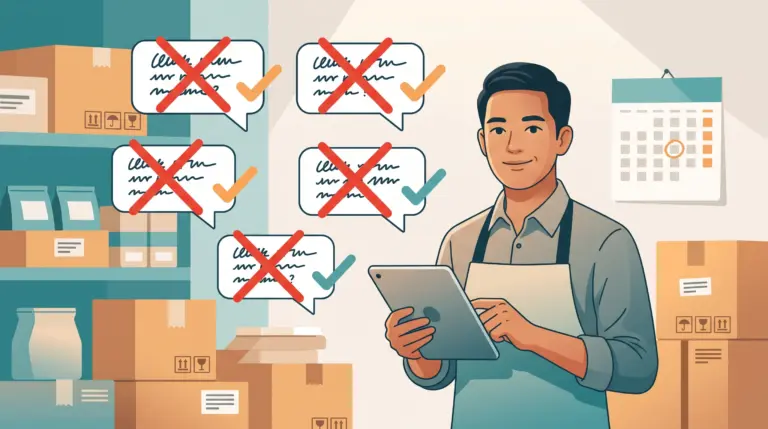
It’s a reasonable question that doesn’t always get a straight answer: if you switch POS systems, or stop using one entirely, what actually happens to years of sales history, customer records, and inventory data? For a lot of business owners, this question only comes up after they’ve already committed to a system — and by then, finding out the answer is harder than it should have been.
POS data ownership Cambodia business owners should expect a clear answer to before committing, not after.
Why This Question Matters More Than It Seems
1. Your sales history is the most valuable thing in the system The product catalogue can be rebuilt. Years of sales history, customer records, and trends over time cannot — once that data is gone or locked away, there’s no getting it back.
2. Businesses do switch systems, and businesses do close Needs change, a provider stops fitting the business, or an owner decides to wind things down. Whatever the reason, what happens to the data at that point shouldn’t be a surprise.
3. “We’ll figure it out if it happens” isn’t a real plan By the time a business actually needs to export its data or confirm what happens after closing, it’s too late to negotiate terms that should have been clear from the start.
Questions Worth Asking Any POS Provider
1. Can I export my own data? A reasonable system should let you export your sales history, customer records, and inventory data in a usable format, on your own, without needing to request it from support and wait.
2. What happens if I stop using the service? Some providers delete data after a period of inactivity. Others retain it. Either answer is fine, as long as you know which one applies before you need it.
3. Is my data held hostage behind a paywall? If exporting your own data requires upgrading to a different plan or paying an additional fee just to get what’s already yours, that’s worth knowing in advance.
4. Where is my data actually stored? A cloud POS stores data on remote servers rather than your own device, which is generally safer against hardware failure — but it’s still worth understanding whose servers, and under what terms.
5. If I switch providers, can I take my data with me? Even if you have no plans to switch, knowing the answer to this removes a source of hesitation that otherwise sits in the back of every decision about the system.
What a Reasonable Answer Looks Like
A business owner shouldn’t need a lawyer to understand what happens to their own sales records. At minimum, a trustworthy POS provider should be able to clearly state:
- Whether you can export your own data on demand
- What happens to your data if you stop paying or close your account
- Whether there’s any additional cost tied to accessing or exporting what’s already yours
- Roughly how long your data is retained after you stop using the service
Why This Shouldn’t Be a Reason to Avoid Cloud POS
It’s worth separating two different concerns that sometimes get mixed together: whether your data is safe from hardware failure, and whether your data is genuinely yours. A cloud POS solves the first problem well — your records don’t disappear because a device breaks or gets stolen. The second problem, ownership and access, depends entirely on the provider’s policies, not on whether the system is cloud-based at all. A clear answer to both is what actually matters, not avoiding cloud systems altogether.
Getting Started
This is a fair question to ask before committing to any POS system, including MyLekha. You can see how MyLekha approaches this on our features page, or reach out directly if you want specifics before switching.
FAQ
Can I export my sales and customer data myself? This is a reasonable thing to expect from any POS provider, and worth confirming directly before committing to one.
What happens to my data if I stop using the service? Policies vary by provider. Ask directly what happens to your data after you stop using the system, and for how long it’s retained.
Does exporting my own data cost extra? It shouldn’t, but this varies by provider. It’s worth confirming before you need it, not after.
Is my data safer in the cloud, or more at risk? Cloud storage protects your data from hardware failure, since it doesn’t live only on one device. Ownership and access depend on the provider’s specific policies, which is a separate question worth asking directly.
Ready for a Straight Answer About Your Data?
See how MyLekha keeps your sales data safe, accessible, and genuinely yours. Start your free 15-day trial today, no credit card required.