

Cash Float USD Riel: How to Never Run Out of Change
It’s 9 a.m. The first customer pays with a large note, and you can’t make change. You send someone running to a neighbor for small bills while the line grows. It’s a small problem that happens in shops across Cambodia, and it’s easy to avoid.
Table of Contents
The answer is a cash float USD riel: the small amount of cash you keep ready in the drawer at the start of each day. In Cambodia, under the dual-currency guidelines of the National Bank of Cambodia, a good float needs both US dollars and riel. Here’s how to set one up.
What is a cash float?
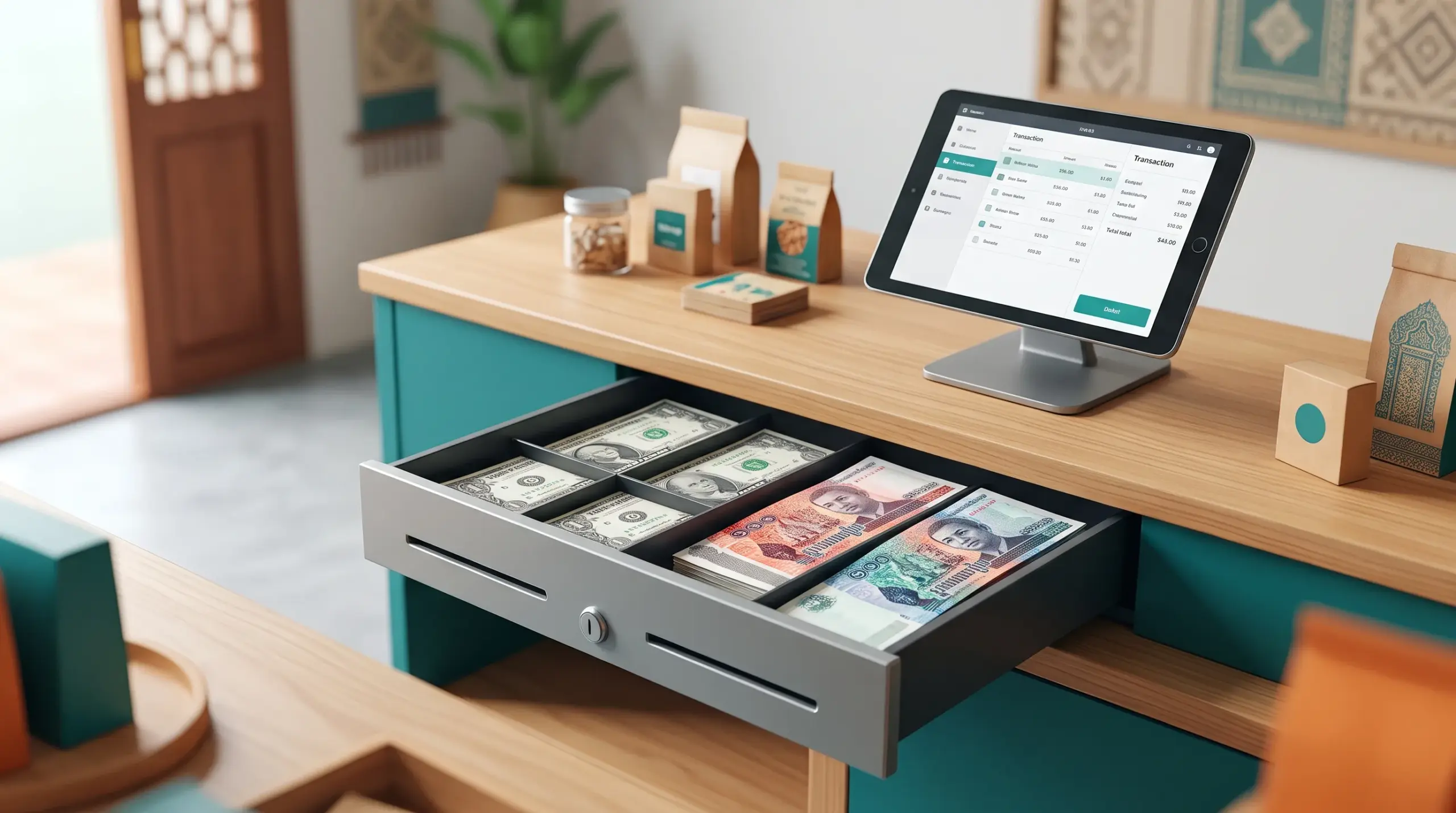
A cash float USD riel is the money in your drawer before the first sale, used only to make change. It isn’t profit. It’s the tool that lets you serve customers who pay with large notes.
Why two currencies make it harder
- Customers pay in either currency. And they often expect change in the other.
- Small notes run out first. Riel in small denominations and USD in small bills disappear fast.
- Mistakes are easy. Converting in your head at a busy counter leads to errors.
- Counting takes longer. Two piles of cash, two totals.
How to build your cash float USD riel
1. Look at your habits
Which notes do customers usually pay with, and what change do you usually give? Think about a typical busy hour.
2. Keep a mix of small notes
Aim for a spread of small USD bills and smaller riel notes, not just big ones. The exact amounts depend on your shop, so start with a modest amount and adjust after a week.
3. Split it clearly
Keep USD and riel in separate compartments, so cashiers don’t mix them up.
4. Write it down
Record the float amount in each currency, and use the same amount every morning. That way, closing calculations are simple: what’s in the drawer now, minus the float, equals what you took in.
5. Top up regularly
Exchange large notes for small ones during quiet hours, not in the middle of a rush.
How your POS helps
Both currencies at checkout. MyLekha accepts payment in USD or riel, so cashiers record how the customer actually paid. See KHQR Payment POS Cambodia.
Fewer cash transactions. Every customer who pays by KHQR or ABA PAY is one less large note to change. Make sure your QR payment is ready at the counter.
A drawer with an owner. Shift tracking separates each cashier’s period, so a shortage can be traced. See Shift and Cash Management.
A simple open and close routine. Count your float at opening and your cash at closing. See Daily Closing Checklist POS.
Keep shop cash separate. Don’t use the float for personal spending. See How to Separate Business and Personal Money.
Common float mistakes
- Using the float as spending money, which makes the drawer look short
- Only keeping large notes, so change runs out
- Mixing currencies, which leads to counting errors
- Changing the float every day, which makes closing confusing
- Never topping up, so the same small notes run out each afternoon
A simple morning check
- Count the float in USD and riel
- Check you have enough small notes in both
- Note any top-up you need
- Start each cashier’s shift with their own drawer
Conclusion
A good float costs very little and prevents many small problems. Keep the right mix of small notes in both currencies, count it every day, and let QR payments reduce how much cash you handle. Your customers will notice that you’re always ready to serve them.
Explore MyLekha POS features, see plans, or talk to our team about setting up your counter.
FAQ
What is a cash float USD riel?
It’s the cash float USD riel you keep in the drawer at the start of the day for making change in both currencies.
Do I need dollars and riel in my float?
Usually yes, because customers pay and expect change in either currency.
Does MyLekha accept both USD and riel?
Yes. MyLekha supports payments in USD or riel.
Can QR payments reduce my need for change?
Yes. Every KHQR or ABA PAY payment is one less cash transaction to change.
Can each cashier have their own drawer?
You can track each cashier’s shift separately, so each drawer has an owner.